Showing posts with label books. Show all posts

Thursday, November 14, 2013

GUESS WHO MET HER READING GOAL??

(hint: THIS KID.)


BAM.

I FINISHED MY READING CHALLENGE!

Guys. I am so excited that I managed to finish this that it's a little sad. I'm a lifelong reader/bookworm, but since high school I've had a hard time reading books consistently. I gave the challenge a shot last year, but didn't manage to meet even 50% of my goal, due to being overwhelmed with school and stuff. This is the same number/goal as last year, but there are a few key differences:

1. I took an English class. Basically, I had to make time for myself to read, despite my other homework and despite the fact that I thought it would take too long, or that I could catch up. OK, here's the thing: Page goals exist for a REASON. I missed two reading assignments of Jane Eyre and found myself like 200 pages behind the class. So I learned to divide books up. Not only does it make the book less intimidating, but it also ensures that you're always making some sort of progress. (I'm using this system for a fiction book I'm reading for my Botany class, but that's another post.)

2. I read during the summer. I know, that sounds like a serious no-brainer, but this summer I got off the internet and read. 

3. I brought my reading book EVERYWHERE with me, and read in small, ten minute intervals between activities or at lunch. This relates to what I said above, but I made time. And because I made time, I read a book over 600 pages in the span of a month with all of my other activities flying around.*


I'm kind of pleased with what I was able to read this year; And the Band Played On had been on my "to read" list since I had failed to finish it my senior year. Also Jane Eyre, which had been nagging me forever.

I also re-read Wide Sargasso Sea as well as The Sun Also Rises (for my English class), and they both held up really well. I'd still like to write about Sun sometime on this blog, but I worry that that would be too much with little context or guarantee that people had read it before. Y'know? (OK, I had also read The Secret Life of Bees before, but since I didn't take any particular liking to it, I wasn't as excited to re-read it.)

To keep myself from going into a book-by-book replay of this past year (this can't be the end of the year already. Haha, nope, I refuse.), I'm going to leave it at that and just say that, if you want a better version of the graphic above, it's on my goodreads profile. Basically, I'm just really, stupidly happy that I was able to read 25 books in a year because reading takes time, you guys, and when I read book blogs I'm always flabbergasted at how there are new reviews popping up right and left.  IN THE MEAN TIME, I'm going to try to at least finish three more books before the end of the 2013 calendar year.  

A more serious review (pfft, yeah right) should pop up sometime tomorrow.


* I'm sorry. I sound SO smug right now. But I guess I'm trying to get a point across? Anyways, I'm surprised you didn't see me as insufferable before.  

Monday, October 28, 2013

Tag: Book Collection


In an effort to eke a few more updates on this here blog before October ends, I thought I would do this fun book tag! Book blogging is the main reason I started this blog, and while I've kind of gotten off topic, I still want to return to reading every now and then. The tag was created by booksforeverafter.

1. How many books do you own?
Err.... I don't know. Since I'm at school, I can't count my collection at home, but the number of unread books I have is 128. I have 11 non-school books I have with me at college, not counting my Kindle. 

2. How long has it taken to accumulate your collection?
I'd say since fourth grade or so? That seems to be the age of my oldest book (not counting Harry Potter). I've purged a lot over the years due to moves and stuff.

3. How often do you buy books?
I try not to buy so many right now, since (1) I'm at school and can't take them home easily and (2) I don't have a disposable income right now. When I usually buy books, it's either at the airport going home, at the Half Price books by my house, and at independent books stores when I visit Madison. (I love love love A Room Of One's Own).

4. What is the first book you remember buying?
A Series of Unfortunate Events: The Bad Beginning and Meet Josefina (An American Girl) are what's coming to me now, so let's go with that.

5. How do you arrange your books?
I always seem to rearrange them when I go home. But right now, it's this:

I stack all nonfiction books next to my bookshelf, since they don't fit and I have a smaller number of them. My fiction books are arranged thusly: 
  • Top shelf: books read for/during high school and nerd camp, and college. Family books, and books read over this past summer. Graphic novels.
  • Second - fourth shelves: Books I haven't read yet, arranged alphabetically. 
  • Fifth shelf: Books I've read and books I've held onto over the years: Sarah Dessen, Agatha Christie, John Green, Garth Nix, Terry Pratchett, Howl's Moving Castle Series, etc. These are the books usually most precious to my heart, as I've gone out and bought copies of them after wear/tear and checking them out from the library over and over and over.
  • Sixth shelf: Books I've read. Art books, fantasy, series books. Animation books, Tintin, David Bowie Is, Percy Jackson, Heroes of Olympus, Harry Potter, the first three Chronicles of Narnia. 

6. What was the last book you purchased?
Never Let Me Go, by Kazuo Ishiguro.

7. What is the longest book you own? 
The Tale of Genji: 1,182 pages.

8. What is the shortest book you own? 
The Yellow Wallpaper and Other Stories: 70 pages.


When I go home for Thanksgiving, I'll try to take a picture of my books for its own little tour. But until then, I've got to buckle down and work.


Thursday, September 26, 2013

I loved you so way back when

(First let me mention Fiona Apple's version of "Pure Imagination?" It's spooky in the best way, but also sad and has basically left me in a stupid, emotional mess for most of the evening.)

Since today was a beautiful day, I decided to take a walk around campus and take some photos. (Well, OK - I also had to take some for a Botany project.)

The baby hills that you see in these pictures are some of Beloit's infamous Indian mounds.  


Because winter lasts for fucking ever, I always forget how green it gets.  


In true school fashion, the year so far has been rushing by at a pace that seems really underwhelming in the day-by-day scheme of things, but a little...panic-inducing when I think about how long I've been at school so far. Like, fuck, it's practically October.

My school books. *Crying* (Also: I don't understand why this photo came out so crappy. )


Whenever I'm overwhelmed, I have the unfortunate habit of pushing away everything I should be doing and do fun projects or watch TV instead. Like, instead of studying for my first Botany test this past week, I finished up watching Malcolm in the Middle, which is one of my favorite shows. My mom, brother, and I used to eat dinner and watch it together. What does it say about us, that it's our favorite show?

As far as classes go this semester, I'm kinda pleased; while there is some tomfoolery/fuckery going on with my Arabic class (mostly the fact that my school doesn't offer the next level, ugh...), my poli sci classes are awesome and Botany is cool I guess. I mostly like taking plants apart and thinking how they and their environments work, rather than any cellular info or anything. Below are some pictures I took today of the area around the science center; most of the flowers are dead, and these were all that remained. I'm not too disappointed, though, since I got to stand by these and watch bees buzz around pollinating. I have such a soft spot for bees, it's so weird. But I really like how these pictures showcase the different shades of purple of the asters.


 Would you believe me if I told you I didn't use a filter for this one...?

Some succulents in the greenhouse that our class is growing.

My plants are the three in the lower right hand corner; the baby sprouts are (hopefully) going to be black and brown-eyed susans.

I'm also starting the study abroad application process; because there is a limited number of third-party programs that my school can pay for, it looks like I may be ditching the first semester in Washington (like I planned), and shooting for Morocco, instead (strangely, it's cheaper) with the second semester in Jordan (which is the program I want to get into more than anything). This is, of course, assuming I am still at my school next year. My mom refuses to acknowledge that I might go that far away for an entire year, but she'll eventually come around.

I feel kind of bad that I don't have anything else to say... I'm not doing much independent reading, lately, and so I don't have any book reviews, and since I'm usually holed up in my room working, I don't see my friends around too much. I feel like getting out of town for just a day or so, but I can't this weekend. (Isn't that always the case?) I have a paper to write this weekend, but I have another post in the works already, and I'm thinking of putting up some more art... I'd like to have fanart to post, but whatever; I only have so many hours in a day. I'm listening to Night Vale and the new Arctic Monkeys album, and reading more fanfic than I should. Good news, I'm at least making my bed and cleaning my room more often. (My dishes are another case, however...)

I hope you lovelies are doing well,

-M

Friday, July 12, 2013

And the Band Played On, by Randy Shilts

Disclaimer: I think, before this post, it is important that I address my own privilege that comes from being a white, heterosexual, cisgender, female. My privilege has largely shielded me from the AIDS virus, and so this post reflects such experiences.  


During the winter of my senior year of high school, my AP American Government teacher scheduled a film in order to A) create some class discussion about the "fourth branch" of the American government (AKA the bureaucracy) and, B) get some end-of-the-semester grading done. While most of my classmates sat in their seats trying to text discreetly, I was held captive, front and center, by the movie and the awful truths that it revealed. Released by HBO in 1993, And the Band Played On was a teleplay based off of Shilts's book (of the same name, published in 1987) about the early years of the AIDS epidemic. Having read the book, I can point out the movie's flaws and lost information. However, despite its shortcomings, this was a movie that kept me thinking, over and over: "How could this happen?" I think that is a question most often asked in discussing the horrific spread of AIDS in the early years of the epidemic. And the Band Played On not only piqued my interest in the politics of AIDS, but also made me confront the privilege that I hold as a heterosexual.

(Btw, It's on YouTube, if anyone is interested in watching it.)

Before watching And the Band Played On, I was largely unfamiliar with AIDS; my knowledge was limited to Kansas's version of Sex Ed. (which is always, always lacking), and the movie Rent (which I didn't even finish. Thank goodness for North High School for putting it on!). Going into the movie, I "knew" the following facts: 
  1. That AIDS was spread through sex and shared needles
  2. That it was very, very bad
  3. That there was a lot of it in Africa
  4. That when you have sex with someone, you put yourself at the mercy of your partner's sexual history (a tidbit I gleaned through this book)


In comparison to my relative ignorance about AIDS, my mother and her side of the family had much more experience with the disease than I had thought. Not only did my mother's cousin, Craig, die from AIDS shortly before I was born, but many of my grandmother's friends died from the disease. 

Craig was, as the women in my family have described him, a great entertainer. He was an artist, and always found ways to bend the rules in order to make someone laugh. Although my great-grandparents usually shook their heads at his antics (such as building a race car ramp that launched the toy cars up into the air), I could tell that they really did love him. I have never asked what they thought about his sexuality, however; I can't bring myself to ask them that, for the fear that they will react poorly. 

However, Craig was also described as being "troubled"; he spent long stretches of time out of touch with his family because he was on the streets without a place to live. He was young, gay, and totally at risk - the "perfect target," as my grandmother described him.

I didn't know Craig, and I'm sorry for it; probably sorrier for not knowing him than almost anyone else in my family. My grandmother and great-grandmother have mentioned how similar to him I am, and because of my artistic inclination, I wish that I had someone to look up to in that way. His mother, my great-aunt, has offered to let me look through documents from her days as a volunteer in Texas hospitals for gay groups. As interested as I am in those documents, I have not had the opportunity to look through them yet. I don't know why my interest in Craig is so… constant. Is it because he is the only one of my family members to be gay? Is it because he was an artist? Or is it just because of the way that he died? It isn't fair for me to pile all of these expectations on him, but I do think that this is a large part of my family history that continues to affect my mom's side to this day. 

My mom and grandmother are also familiar with the death and devastation that AIDS wrought on the gay community because of their personal ties: for my mom, it was her business school friends; for my grandmother, it was her lawyer friends. My grandmother has many gay friends that she has met through the law community in my city. They do not talk a lot about AIDS when I ask them about it; they mostly say that it was a tragedy how so many of them died. These sentiments, I know, are not unique. 

I felt like you guys could use a picture. Any picture. Via. 


With my interest in AIDS and its effects on the gay community piqued by the film, my chance came to further explore the topic in the final paper for my current events class. The paper had to be an academic review about a book that discusses an issue that took place after 1945; after spending so many years in high school writing about Catherine the Great, I wanted to write about something a little bit more current; Randy Shilts's And the Band Played On was the obvious choice. The copy I managed to hunt down in Barnes & Noble was the only copy in the entire store, in a section titled "Social Sciences" - the one area probably perused less than "Local" and "Travel." (The fact that there was one book in a tiny corner of an obscure shelf only illustrates to me Shilts's idea of how AIDS was so expertly mishandled.) It was also just over 600 pages. Thankfully, we only had to read a minimum of 150 pages; I barely managed to finish that small chunk of reading in time before spitting out a paper that, in retrospect, needed so much more information. 

Then I put it on my shelf and looked at it, guiltily, for over a year until I got sick of the guilt and pulled it off of the shelf my second week of summer vacation. As I got my summer reading list together and prepped to leave for Wisconsin, I decided to bring it so that I would finally be able to finish it. I mentioned in an earlier post about wanting to read things that made me think critically about the state of things, and I figured that this book - Shilts's thorough and intricate examination of early AIDS politics - would be perfect for such a task.  

In my opinion, And the Band Played On is nothing short of a masterpiece for Randy Shilts. He considers every side to the story, interviewing those involved, their friends, and everyone else in between. The narrative that he weaves is dense, packed with AIDSpeak, political and scientific jargon, and the horrific clash of it all. Leaders of all sides were consulted (except maybe Jerry Falwell), interviewed, and represented in the book. He examines the gay community and its response to AIDS, and notes how it was as divided as every other group. 

Shilts examines the bureaucratic red tape that kept the Center for Disease Control, the National Institutes of Health, the National Cancer Institute, and the Food and Drug Administration (just to name a few) from doing their jobs. Actually, that sounds misleading; he discusses the people and administrations who used the red tape to their advantage to almost derail scientific inquiry. He maps the twisted politics and science of the time, establishing the fact that no one was innocent during the AIDS outbreak; doctors, cut short of making scientific discoveries and breakthroughs thanks to funding troubles, also refused to collaborate on issues so as to lose any sort of credibility or recognition in the field. Many bureaucrats wished to maintain the Reagan Administration's stance of lowering domestic spending, knowing that their divisions could be hurt if they spoke out; however, some institutes (like the American Red Cross and the FDA) felt that they were being disrespected because other institutes were infringing on their turf. 

Shilts also mentions how Haitians and drug addicts - other people who were infected earlier in the epidemic - were considered to be relatively unimportant compared to the people who had the power to create policies that would help slow, if not stop, the spread of AIDS. He also discusses how, when hemophiliacs "finally"got AIDS, the interest picked up slightly... while all efforts at screening blood were shut down and hemophiliacs, too, were allowed to die. 

Again, please excuse the word vomit. Via. 


As for the gay community, initial feelings towards how to handle the disease differed by coast with the East Coast (aka New York City) being more conservative in its approach whereas the West Coast/California led the country in research, spending, and attempts at prevention. Shilts also mentions how many political activists, such as Bill Kraus and Cleve Jones, were surprised as to how quickly a community that had been united by Harvey Milk years before was torn apart. Shilts also largely dismisses the media, and recalls how many news editors did not care to have a "homosexual issue" visible in their papers (often leaving AIDS out at all), as well as reporters who seem to have failed at seeking the truth and not chasing leads and leaving evidence that revealed just how… uninvolved the Reagan Administration (as well as many other Capital Hill groups) was with the disease. Because they were not challenged in their ways, an atmosphere developed where the status quo allowed matters to utterly deteriorate. 

The AIDS virus, Shilts states, flourished under these circumstances. 

I cried and I raged while I read this book. Nothing, it seemed, ever seemed to go right. The dark tunnel - an image often recalled by victims and doctors and politicians - never seemed to end. And it made me think. It made me question the system that I live in ("under???") and how I benefit from the fact that I am heterosexual (and white).

I'm not comfortable with thinking how this would come about, but the fact of the matter is that media hype = research money, but media hype only exists if someone who "matters" comes down with the disease. Shilts mentions this by citing the statistic that in 1985 San Francisco, gay men made up over 97% of all AIDS cases, but the ones that kept bringing back journalists and politicians were the white heterosexual men who contracted the disease. The fear of heterosexual transmission was almost laughable, in Shilts's view; while prostitutes did have the ability to spread AIDS, straight men (in America, at least) usually contracted the disease through shared needles.

Despite the fact that I was born "after" AIDS, I do not think that the life I could have led before the disease (before 1980) would be much different from the one I am living now; I am a member of the dominant racial and cultural group in America. My civil rights and sexual freedom was not under fire as a result of the AIDS virus; my community did not have to undergo a serious, almost soul-searching period in order to adapt to the death and disease. Because of where I live and who I am, AIDS is, to me, mostly regulated to discussions of Africa. This is by no means "right," or "unfair," but in reading this book I discovered that, while gay people have won many victories in America, there are still things that remain the same. It is up to me to use the privilege I have to bring attention to these causes.

Here are some statistics*:

  • More than one million people in America are living with HIV.
  • 33.4 million people live with HIV/AIDS worldwide. 
  • 1 in 5 (20%) of people living with HIV do not know that they are infected.
  • Every 9.5 minutes, someone in the US is infected with HIV. 
  • Individuals who contracted HIV through heterosexual contact make up about 28% of all HIV infections.
  • In 2008, African Americans made up approximately 46% of people living with HIV. 
  • 97% of worldwide HIV/AIDS cases live in low-and-middle-income countries - especially sub-Saharan Africa. 


Randy Shilts died in 1994 from AIDS. While writing And the Band Played On, he decided to refrain from testing himself for the virus in order to maintain a neutral stance on the events. After being diagnosed HIV +, he said to the New York Times, "HIV is certainly character-building… It's made me see all of the shallow things we cling to, like ego and vanity… Of course, I'd rather have a few more T-cells and a little less character."

Like many before them, Randy Shilts and Craig succumbed to a disease that could have been stopped sooner; that could have been prevented from spreading as it did; that killed so many people who didn't have to die. This book lives on in the memory of those who died from AIDS, and begs that such atrocity be kept from happening again. 

Randy Shilts. Via. 

If you are also interested in the early years of AIDS, I have two main recommendations: How to Survive a Plague (2012) and We Were Here (2011). 

 
                                            Via.                                                                                                         Via.


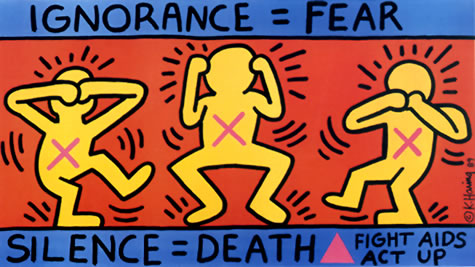
Both movies should still be available on Netflix. How to Survive focused on Larry Kramer's AIDS activist group ACT UP; ACT UP's achievement, disputes, and eventual rifts. It also discusses the impact that ACT UP had on AIDS medical research. We Were Here was more focused on the effect that AIDS had on the San Francisco's gay community - the response, the death, everything. Neither movie is easy to watch, but are very necessary to understanding the effects of AIDS more.

If you have any recommendations, please leave a comment below! Or if you have any thoughts on And the Band Played On (or anything else I had to say in this post), please speak up! I would love to hear your thoughts. 

-M

P.S.: Here is a 60 Minutes feature on "Patient Zero"; Randy Shilts is in it and so is a lot of great stuff that's in the book is discussed.

*This is the resource I used for such statistics. Credit to aids.gov.

Monday, June 17, 2013

You know that feeling when you take a chance on a book and it's really, really great?

...Yeah, that's this one.

(Yes, I realize that updating this blog the day after I talk about not being around much in the future is kind of lame and stupid, but I'm trying to take advantage of the fact that my homework load has not picked up full steam yet)

When I picked up Elisa Schappell's Blueprints for Building Better Girls, it was mostly because I thought that the cover art and title were interesting. 


I don't read short story collections very often; Before Blueprints, I had only read three other short story collections before: 

  1. An F. Scott Fitzgerald short story collection of Flappers and Philosophers and Tales of the Jazz Age (Here)
  2. Firebirds (here)
  3. Different Seasons, by Stephen King (which was awesome, btw)

For that reason, my choosing Schappell's Blueprints was therefore more of a shot in the dark kind of deal, and it was a task that I was kind of wary about undertaking. As I've said before on this blog, I don't read "contemporary" "adult" fiction very often, so I don't have a good understanding yet of what authors I do and don't prefer.

I'm really, really happy to report that I loved this collection. 

To be honest, I read this book a few weeks ago, so I can't remember any passages from it specifically; however, the theme throughout each story was, "you have no idea what is going on in my head."

(God, I feel like that's such a stupid way to summarize the book, but that's all I have. Sorry.)

Different reviewers (from the NY Times and Bitch Magazine) cited the stories as focusing on "womanhood," which is something I should have said above  I agree with; many of the women in Blueprints are often at odds with themselves as well as with each other. Relationships are dissected, scrutinized, and redefined; Heather, "the school slut" in the first story, makes an appearance in the last one as well, as a mother with a teenage son. 

The women in these stories enter each others' lives at various points, and in different ways. I liked that aspect of these stories (I'm a huge fan of "easter eggs" in books), although the sappy part of me wishes that some of the other characters (Kate and Bender specifically) had more of a role to play in other people's stories. Despite that, I really liked being able to take their thoughts and emotions into consideration even if I was reading the story that surrounded one of their friends or coworkers. 

There were times reading this book when I felt outraged on behalf of the characters, as well as times when I was furious at them. Each of these women are shown to struggle and succeed in different ways; there is no "correct" way to deal with the disappointment and sadness and confusion that they felt, but in considering my own expectations for their behavior I was able to more fully understand what had shaped me to think why my way was the "right" one. I'm still trying to figure out where I "fit in" as a feminist, and so this book really helped me examine some parts of myself that I wasn't aware of without being obnoxious or patronizing.  

Does any of that make sense?

What I'm trying to say here is that I really, really liked this book; it's sharp, and smart, and doesn't play the rules in using classic female stereotypes. If you're looking for a book to read that has punch, and wouldn't mind trying out a short story collection, look here - Schappell has just what you need. 


Peace out, Chickadees (as my grandmother would say)
-M

Sunday, June 16, 2013

Update from the Gates of Hell, or: Let's All Do the Charleston! (The Diviners, by Libba Bray)

I'm going to update this blog today, because apparently starting tomorrow, my life will be handed over on a silver platter to Arabic language (which I will be devoting myself to for the next eight weeks). This is, of course, going to be a huge time commitment for me, so updates (and reading) will slow down for the next while.

But before I go down that path, here's what I finished reading (and almost forgot to blog about!):


When I was in middle school, I read as much Libba Bray as I could get my hands on which, at the time, consisted of her Gemma Doyle trilogy. Since then, I've also read Beauty Queens and some of Going Bovine... and while I liked them, they didn't have the same flair as the Gemma Doyle books. 

The Diviners, however, made me squeal with joy. I mean, it's a supernatural book that takes place in 1920s New York City. (Right??? How awesome does that sound?)

The Diviners is about a young woman named Evie who, after a disastrous display of her psychic abilities in her small Ohioan (is that even a word?) hometown, is made to move in with her Uncle Will. Her Uncle Will not only lives in New York City (which is a heaven for this young flapper), but also runs the Museum of the "Creepy Crawlies" (or, of American Folklore, Superstition, and the Occult, if you want to get technical). He is unsuitable to take care of young Evie, but as he is more preoccupied with a serial killer (of the supernatural persuasion) on the loose, Evie (and the reader) is allowed to roam the streets of New York.

There's a wide range of characters in The Diviners, who also encompass some growing social issues and trends from the 1920s; Socialists, African Americans, gays, etc., are all represented. The "melting pot" that is New York (and, on a larger scale, America) is shown to be new and electric, but also dark and unstable. Older, darker forces are establishing a hold on the country despite scientific and social change. 

Obligatory Josephine Baker doing the Charleston. Via

Another totally necessary flapper. Via

While my description of the novel can sound a little limiting, the story is told by several people, so nothing gets too stale. This also means that, with many characters' fates up in the air, the reader is left wanting more and desperate to get back to Evie's New York. The reader is also left with the impression that something is most decidedly wrong, although whatever the cause of the terror and unease is as of yet unknown. 

It was SO SCARY; like, I had to go into the basement where my brother was killing people on the XBox just so I knew that, if Naughty John somehow managed to kill me through the book, someone would know. (I put up with my brother's "I seriously can't believe that we're related, what, are you fucking kidding me" look just so I could finish.) I don't get scared by books often/almost never, so I'm going to just make a special note of that. Well done, Libba Bray *claps*

Bray obviously did her research, with all of the '20s slang that is woven through the novel. It's sometimes cheesy, but she doesn't overdo it, and by using slang, she's able to establish characters such as the flapper girls Evie and Theta more easily. 

I had been struggling with keeping up my reading for a while before reading this book; I wasn't super interested in anything I had gotten from the library, and I was easily distracted from what I was reading while I was reading. I think it was because I had gotten so wrapped up in trying to read books that I felt like I should read, I had forgotten to read something because I wanted to. And I think that's what made The Diviners such a fun, pleasure-filled read for me; no one was expecting anything from me, and there was no expectation I was trying to meet. Does that make sense?

Anyways, I'm back to reading things I want to for a change, and it feels great. All too easily, I feel like I have to be reading something specific at a certain time, and my increased time on the internet (on Goodreads, reading other blogs, etc.) doesn't help my feelings of constant inferiority. I've talked before on here how I so desperately want to be well-read; and, in the process of wanting to be so, I make myself lists of "classic" and "good" books, when I should be the one deciding for myself what's good and what isn't. For someone like me who loathes people telling her what she should and shouldn't be reading (unless it's a friendly reading recommendation, I love those!), I use websites like Goodreads an awful lot to make sure that what I've read will pass muster. 

That's probably enough from me at this point; hopefully y'all haven't died of boredom. Closing statement: read Libba Bray's The Diviners! (but, of course, only if you want to...)

Peace,
-M

Thursday, June 13, 2013

Moving at the Speed of Sound

Just a quick update today. Because I've been "entertaining" this entire past week (and now that they're gone and I should theoretically have some time to myself), I leave TOMORROW for school/camp/whatever (and I need to PACK like a mofo).

I've been trying to read, but between watching lots and lots of the X Files and lots and lots of Saturday Night Live (circa 1993), I haven't devoted much time to it. So, here's a general update to what I've been reading lately:


I have a post or two in the works, so I'll hopefully have them up some time next week.

HAGS,
Maddie

Saturday, May 18, 2013

Another Book Haul! And Thoughts on Reading

I haven't started my summer programs yet, so until then, I have looooong stretches of free time that I need to fill. So what do I do with my free time? Go to the library. And pick up everything pretty.


My latest haul. Seems like I have a problem...

(In my defense, I've been anxiously waiting for my hold on Alison Bechdel's Are You My Mother? to come through.)

Also, I'm almost done with my last batch - I'm currently working through The Lonely Polygamist, but I kind of wanted to have a back-up in the mean time. Or *cough* a lot of backups. I'm worried that I'm not as interested in Polygamist as I should be, and that I'm not really invested in these books like I should. I've actually returned Tolstoy and the Purple Chair, two days after picking it up. I can't put my finger on why, but I just didn't care for it.

Why is that? The idea of reading a book a day is crazy insane, but also really appealing to me. I really wanted to read this book... but why? Because if I read it, I too could read a book every day? Or because I would be living vicariously through the author?

It bothers me that I didn't like Tolstoy like I feel I should have.

But something has been on my mind lately; about reading, and books, and what I'm choosing to read and why. Also, trying to account for my huge surge in reading.

Why am I reading these books, and why so quickly? Am I giving myself the opportunity to really read and understand, or analyze them? Or am I blowing through them like candy, not really taking them in in any meaningful way? My mom was the first one to ask me this, but there's a quote that I've read recently that, for a lack of being able to find it, says that it's better to read one book ten or twenty or an infinite amount of times and have a deep understanding of it and the author than reading a ton of books and have a shallow understanding or knowledge of it.

I worry a lot about whether or not I'm well read for my age. Part of this insecurity is because A) I'm in college, and comparing myself to my friends and not-friends is unavoidable, since I'm a competitive person and pride myself on being smart or well educated; and B)I'm more involved online, and am exposed to more people who are my age and have read more, created more, know more than me. And I don't like that feeling; it's deeply unsettling for me, and while I'm working on nipping it in the bud when I can feel my competitive side rise, it's still an issue.

I want to know things. And I want to understand them. More than that, I want to be able to understand other people when they mention things casually in discussion. It isn't that I hate ignorance; it's just that I don't tolerate it in myself. And lately I've been feeling like I haven't been really getting the full benefit of the books that I'm reading.

Literally my nightmare. Via

So, I guess what I'm trying to say is that I'm going to make an effort to actually read and understand the books that I'm checking out. While I understand that there is literary fluff out there (and I'll gorge myself on it), I want to be able to understand the books I read and why they're important. I want to be able to have a discussion with someone about them, and have it go beyond, "Yeah, I read it. I liked it." (Because WHY did I like it? I've found that I like books a LOT better after I've given them critical thought.)

I'll sign off on that note; stay cool y'all!
-M