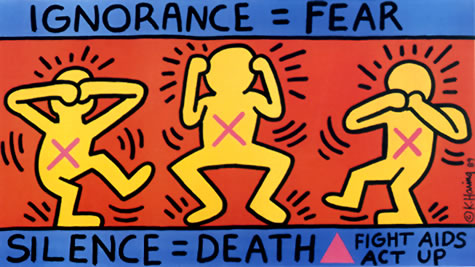
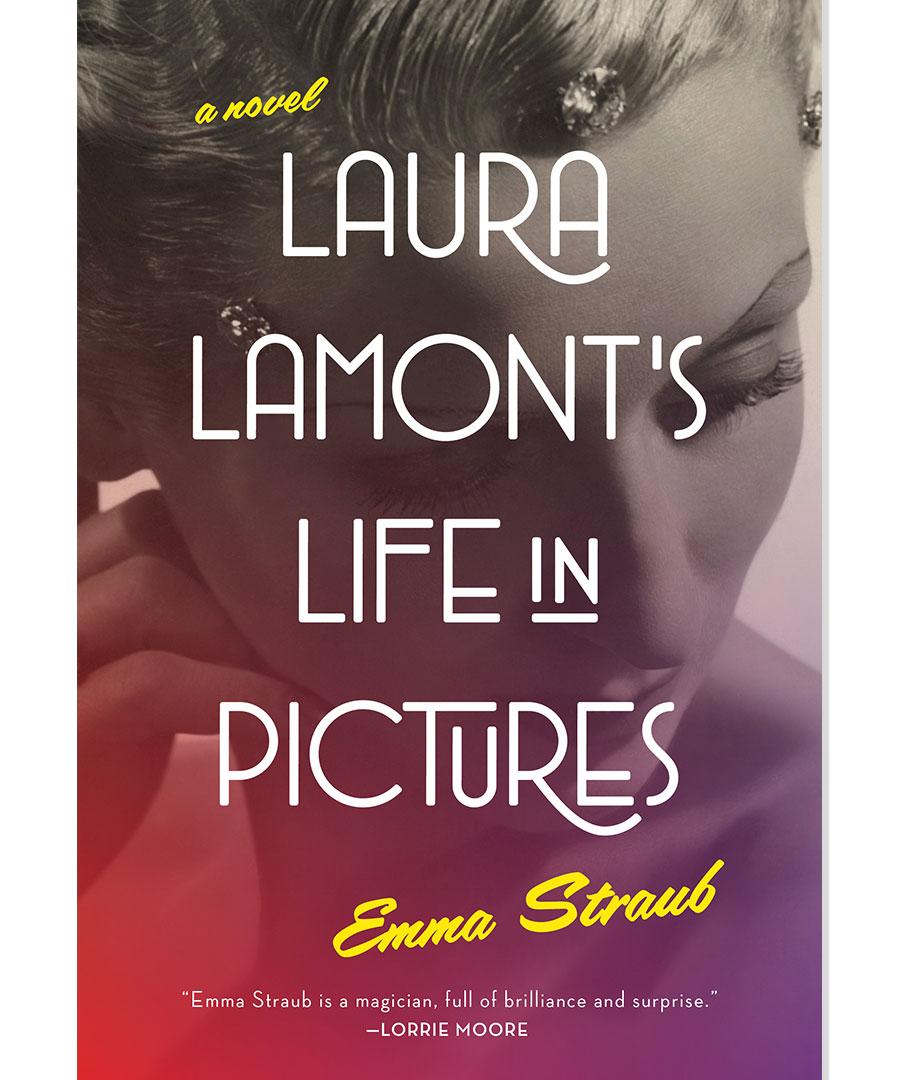
Disclaimer: I think, before this post, it is important that I address my own privilege that comes from being a white, heterosexual, cisgender, female. My privilege has largely shielded me from the AIDS virus, and so this post reflects such experiences.

During the winter of my senior year of high school, my AP American Government teacher scheduled a film in order to A) create some class discussion about the "fourth branch" of the American government (AKA the bureaucracy) and, B) get some end-of-the-semester grading done. While most of my classmates sat in their seats trying to text discreetly, I was held captive, front and center, by the movie and the awful truths that it revealed. Released by HBO in 1993, And the Band Played On was a teleplay based off of Shilts's book (of the same name, published in 1987) about the early years of the AIDS epidemic. Having read the book, I can point out the movie's flaws and lost information. However, despite its shortcomings, this was a movie that kept me thinking, over and over: "How could this happen?" I think that is a question most often asked in discussing the horrific spread of AIDS in the early years of the epidemic. And the Band Played On not only piqued my interest in the politics of AIDS, but also made me confront the privilege that I hold as a heterosexual.
Before watching And the Band Played On, I was largely unfamiliar with AIDS; my knowledge was limited to Kansas's version of Sex Ed. (which is always, always lacking), and the movie Rent (which I didn't even finish. Thank goodness for North High School for putting it on!). Going into the movie, I "knew" the following facts:
- That AIDS was spread through sex and shared needles
- That it was very, very bad
- That there was a lot of it in Africa
- That when you have sex with someone, you put yourself at the mercy of your partner's sexual history (a tidbit I gleaned through this book)
In comparison to my relative ignorance about AIDS, my mother and her side of the family had much more experience with the disease than I had thought. Not only did my mother's cousin, Craig, die from AIDS shortly before I was born, but many of my grandmother's friends died from the disease.
Craig was, as the women in my family have described him, a great entertainer. He was an artist, and always found ways to bend the rules in order to make someone laugh. Although my great-grandparents usually shook their heads at his antics (such as building a race car ramp that launched the toy cars up into the air), I could tell that they really did love him. I have never asked what they thought about his sexuality, however; I can't bring myself to ask them that, for the fear that they will react poorly.
However, Craig was also described as being "troubled"; he spent long stretches of time out of touch with his family because he was on the streets without a place to live. He was young, gay, and totally at risk - the "perfect target," as my grandmother described him.
I didn't know Craig, and I'm sorry for it; probably sorrier for not knowing him than almost anyone else in my family. My grandmother and great-grandmother have mentioned how similar to him I am, and because of my artistic inclination, I wish that I had someone to look up to in that way. His mother, my great-aunt, has offered to let me look through documents from her days as a volunteer in Texas hospitals for gay groups. As interested as I am in those documents, I have not had the opportunity to look through them yet. I don't know why my interest in Craig is so… constant. Is it because he is the only one of my family members to be gay? Is it because he was an artist? Or is it just because of the way that he died? It isn't fair for me to pile all of these expectations on him, but I do think that this is a large part of my family history that continues to affect my mom's side to this day.
My mom and grandmother are also familiar with the death and devastation that AIDS wrought on the gay community because of their personal ties: for my mom, it was her business school friends; for my grandmother, it was her lawyer friends. My grandmother has many gay friends that she has met through the law community in my city. They do not talk a lot about AIDS when I ask them about it; they mostly say that it was a tragedy how so many of them died. These sentiments, I know, are not unique.
I felt like you guys could use a picture. Any picture. Via.
With my interest in AIDS and its effects on the gay community piqued by the film, my chance came to further explore the topic in the final paper for my current events class. The paper had to be an academic review about a book that discusses an issue that took place after 1945; after spending so many years in high school writing about Catherine the Great, I wanted to write about something a little bit more current; Randy Shilts's And the Band Played On was the obvious choice. The copy I managed to hunt down in Barnes & Noble was the only copy in the entire store, in a section titled "Social Sciences" - the one area probably perused less than "Local" and "Travel." (The fact that there was one book in a tiny corner of an obscure shelf only illustrates to me Shilts's idea of how AIDS was so expertly mishandled.) It was also just over 600 pages. Thankfully, we only had to read a minimum of 150 pages; I barely managed to finish that small chunk of reading in time before spitting out a paper that, in retrospect, needed so much more information.
Then I put it on my shelf and looked at it, guiltily, for over a year until I got sick of the guilt and pulled it off of the shelf my second week of summer vacation. As I got my summer reading list together and prepped to leave for Wisconsin, I decided to bring it so that I would
finally be able to finish it. I mentioned in an earlier post about wanting to read things that made me think critically about the state of things, and I figured that this book - Shilts's thorough and intricate examination of early AIDS politics - would be perfect for such a task.
In my opinion, And the Band Played On is nothing short of a masterpiece for Randy Shilts. He considers every side to the story, interviewing those involved, their friends, and everyone else in between. The narrative that he weaves is dense, packed with AIDSpeak, political and scientific jargon, and the horrific clash of it all. Leaders of all sides were consulted (except maybe Jerry Falwell), interviewed, and represented in the book. He examines the gay community and its response to AIDS, and notes how it was as divided as every other group.
Shilts examines the bureaucratic red tape that kept the Center for Disease Control, the National Institutes of Health, the National Cancer Institute, and the Food and Drug Administration (just to name a few) from doing their jobs. Actually, that sounds misleading; he discusses the people and administrations who used the red tape to their advantage to almost derail scientific inquiry. He maps the twisted politics and science of the time, establishing the fact that no one was innocent during the AIDS outbreak; doctors, cut short of making scientific discoveries and breakthroughs thanks to funding troubles, also refused to collaborate on issues so as to lose any sort of credibility or recognition in the field. Many bureaucrats wished to maintain the Reagan Administration's stance of lowering domestic spending, knowing that their divisions could be hurt if they spoke out; however, some institutes (like the American Red Cross and the FDA) felt that they were being disrespected because other institutes were infringing on their turf.
Shilts also mentions how Haitians and drug addicts - other people who were infected earlier in the epidemic - were considered to be relatively unimportant compared to the people who had the power to create policies that would help slow, if not stop, the spread of AIDS. He also discusses how, when hemophiliacs "finally"got AIDS, the interest picked up slightly... while all efforts at screening blood were shut down and hemophiliacs, too, were allowed to die.
Again, please excuse the word vomit. Via.
As for the gay community, initial feelings towards how to handle the disease differed by coast with the East Coast (aka New York City) being more conservative in its approach whereas the West Coast/California led the country in research, spending, and attempts at prevention. Shilts also mentions how many political activists, such as Bill Kraus and Cleve Jones, were surprised as to how quickly a community that had been united by Harvey Milk years before was torn apart. Shilts also largely dismisses the media, and recalls how many news editors did not care to have a "homosexual issue" visible in their papers (often leaving AIDS out at all), as well as reporters who seem to have failed at seeking the truth and not chasing leads and leaving evidence that revealed just how… uninvolved the Reagan Administration (as well as many other Capital Hill groups) was with the disease. Because they were not challenged in their ways, an atmosphere developed where the status quo allowed matters to utterly deteriorate.
The AIDS virus, Shilts states, flourished under these circumstances.
I cried and I raged while I read this book. Nothing, it seemed, ever seemed to go right. The dark tunnel - an image often recalled by victims and doctors and politicians - never seemed to end. And it made me think. It made me question the system that I live in ("under???") and how I benefit from the fact that I am heterosexual (and white).
I'm not comfortable with thinking how this would come about, but the fact of the matter is that media hype = research money, but media hype only exists if someone who "matters" comes down with the disease. Shilts mentions this by citing the statistic that in 1985 San Francisco, gay men made up over 97% of all AIDS cases, but the ones that kept bringing back journalists and politicians were the white heterosexual men who contracted the disease. The fear of heterosexual transmission was almost laughable, in Shilts's view; while prostitutes did have the ability to spread AIDS, straight men (in America, at least) usually contracted the disease through shared needles.
Despite the fact that I was born "after" AIDS, I do not think that the life I could have led before the disease (before 1980) would be much different from the one I am living now; I am a member of the dominant racial and cultural group in America. My civil rights and sexual freedom was not under fire as a result of the AIDS virus; my community did not have to undergo a serious, almost soul-searching period in order to adapt to the death and disease. Because of where I live and who I am, AIDS is, to me, mostly regulated to discussions of Africa. This is by no means "right," or "unfair," but in reading this book I discovered that, while gay people have won many victories in America, there are still things that remain the same. It is up to me to use the privilege I have to bring attention to these causes.
Here are some statistics*:
- More than one million people in America are living with HIV.
- 33.4 million people live with HIV/AIDS worldwide.
- 1 in 5 (20%) of people living with HIV do not know that they are infected.
- Every 9.5 minutes, someone in the US is infected with HIV.
- Individuals who contracted HIV through heterosexual contact make up about 28% of all HIV infections.
- In 2008, African Americans made up approximately 46% of people living with HIV.
- 97% of worldwide HIV/AIDS cases live in low-and-middle-income countries - especially sub-Saharan Africa.
Randy Shilts died in 1994 from AIDS. While writing
And the Band Played On, he decided to refrain from testing himself for the virus in order to maintain a neutral stance on the events. After being diagnosed HIV +, he said to
the New York Times, "HIV is certainly character-building… It's made me see all of the shallow things we cling to, like ego and vanity… Of course, I'd rather have a few more T-cells and a little less character."
Like many before them, Randy Shilts and Craig succumbed to a disease that could have been stopped sooner; that could have been prevented from spreading as it did; that killed so many people who didn't have to die. This book lives on in the memory of those who died from AIDS, and begs that such atrocity be kept from happening again.
If you are also interested in the early years of AIDS, I have two main recommendations: How to Survive a Plague (2012) and We Were Here (2011).
Both movies should still be available on Netflix. How to Survive focused on Larry Kramer's AIDS activist group ACT UP; ACT UP's achievement, disputes, and eventual rifts. It also discusses the impact that ACT UP had on AIDS medical research. We Were Here was more focused on the effect that AIDS had on the San Francisco's gay community - the response, the death, everything. Neither movie is easy to watch, but are very necessary to understanding the effects of AIDS more.
If you have any recommendations, please leave a comment below! Or if you have any thoughts on And the Band Played On (or anything else I had to say in this post), please speak up! I would love to hear your thoughts.
-M
P.S.:
Here is a
60 Minutes feature on "Patient Zero"; Randy Shilts is in it and so is a lot of great stuff that's in the book is discussed.
*
This is the resource I used for such statistics. Credit to aids.gov.